The Myth of Light and Color
Mahmoud Saïd—Son of the Sun and the Sea, and Vanguard of Arab Modernism
Within the annals of Arab visual arts, few figures have harmonized the judicial austerity of the bench with the ethereal poetry of the brush as consummately as the Egyptian master Mahmoud Saïd (1897–1964). Far from a mere painter of transient scenes, Saïd operated as a “visual philosopher.” He single-handedly reconfigured the modern Egyptian consciousness, seamlessly blending his innate aristocratic heritage with the kinetic pulse of the populace—transmuting mundane, vernacular realities into timeless, canonical masterpieces that remain fiercely contested by elite museums and international auction houses alike.
I. Lineage and Origins:
From the Bride of the Mediterranean to European Academies
Mahmoud Mohamed Saïd was born on April 8, 1897, in the historic, seafaring quarter of Anfoushi in Alexandria, to a family of distinguished aristocratic lineage. His father, Mohamed Saïd Pasha, served as Prime Minister of Egypt, immersing the young artist from his earliest days in an environment highly receptive to global culture and diplomacy. Yet, it was the raw, enchanting topography of Alexandria—its sprawling coastlines, its harbor teeming with Mediterranean life, and the towering silhouette of the Sidi Abo El Abbas El Morsi Mosque—that left an indelible imprint upon his visual memory.
In compliance with his family’s patrician expectations, Saïd completed his formal education in Egypt before obtaining a Bachelor of French Law in 1919. Encouraged by his father to pursue postgraduate legal studies, he departed for Paris. However, the latent creative energies of his spirit found their true sanctuary in the French capital; he spent his days dissecting the collections of European museums and enrolled in the open studios of the Académie de la Grande Chaumière and the Académie Julian. During this formative period, Saïd absorbed the avant-garde sensibilities of European modernism while looking back with reverence to Renaissance masters like Leonardo da Vinci and Michelangelo, the Venetian school of colorists, and the raw, unadulterated emotional expressionism of Vincent van Gogh.
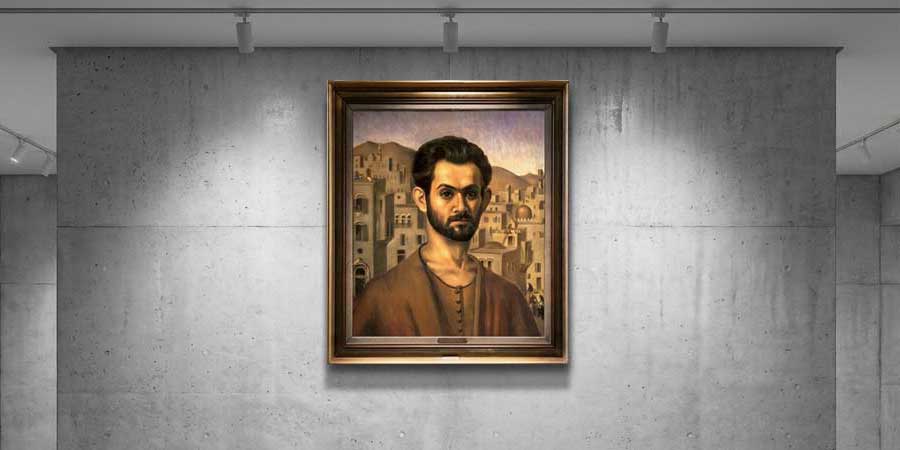
Mahmoud Saïd, Self-Portrait in Jerusalem, c. 1940. A rigorous, expressive psychological document showcasing the artist’s patrician dignity and piercing gaze. His silhouette seamlessly intersects with the layered, historic urban topography in the background, reifying the intrinsic connection between form and Middle Eastern architectural heritage.
II. Gavel vs. Brush:
The Definitive Moment of Liberation
Saïd climbed the ranks of the mixed judiciary in Egypt, receiving his appointment to the Mixed Court in 1921 and eventually ascending to the prestigious rank of Counselor at the Court of Appeal in 1939. Yet, beneath the formal robes, an intense psychological tension persisted between the clinical objectivity of the courtroom and the visceral call of the canvas.
In 1947, Saïd made a profound existential choice that permanently altered the trajectory of Arab art history: he resigned from his high judicial office to commit himself unconditionally to his creative practice. Reflecting on this cathartic liberation from institutional constraints, Saïd famously declared that he had returned to being “a son of the sun, the sea, and freedom, untamed in the wilderness”—affirming that to cease painting was synonymous with spiritual death, while artistic creation was the only true metric of life.
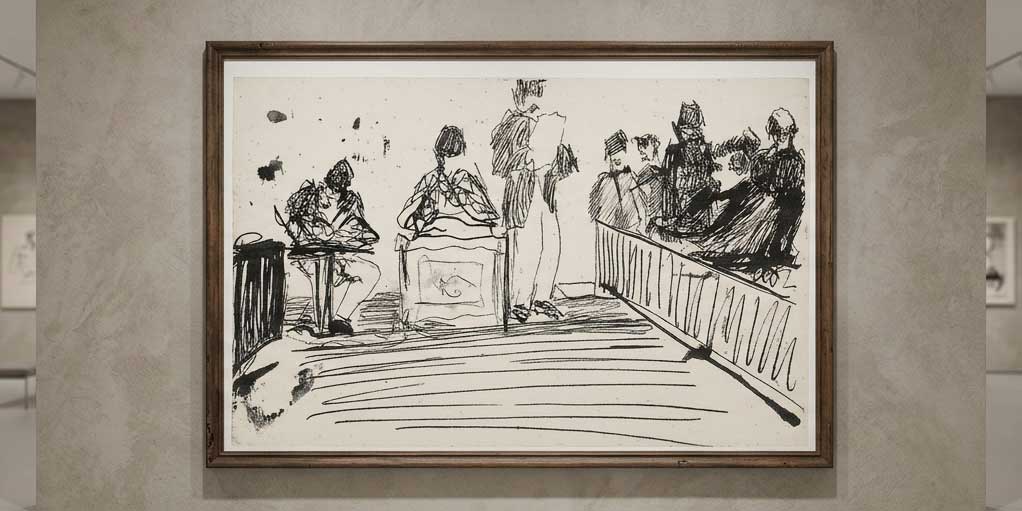
Mahmoud Saïd, Courtroom Sketch (Ink on paper). A rare, archival graphic text capturing the artist’s dual reality during his judicial tenure. His spontaneous and rapid gestural ink strokes distill the human drama and dramatic shadows of the courtroom, foreshadowing his eventual, cathartic liberation toward pure artistic creation.
III. The Philosophy of Saïd’s Art:
The Aesthetic Manifesto
When queried on the ultimate purpose of artistic creation, Saïd articulated a profound manifesto on visual ontology:
“I paint the canvas purely for the sake of the canvas itself; I seek no alternative utility. I paint so that loved ones and the youth may untangle themselves from their earthly sorrows upon beholding it.”
For Saïd, the genesis of a painting mirrored the profound somatic experience of a mother feeling the first quickening of a child within her womb. He was frequently known to awaken in the depths of the night, driven by an almost mystical compulsion to sketch a concept that refused to remain dormant.
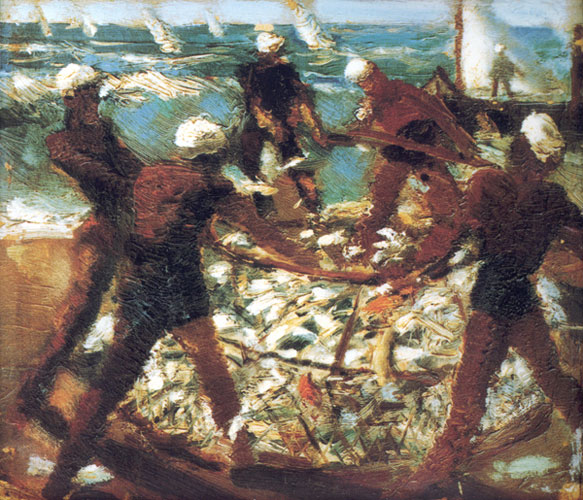
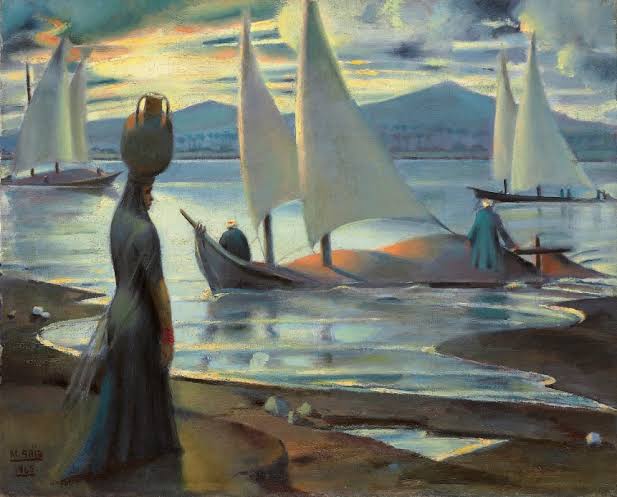
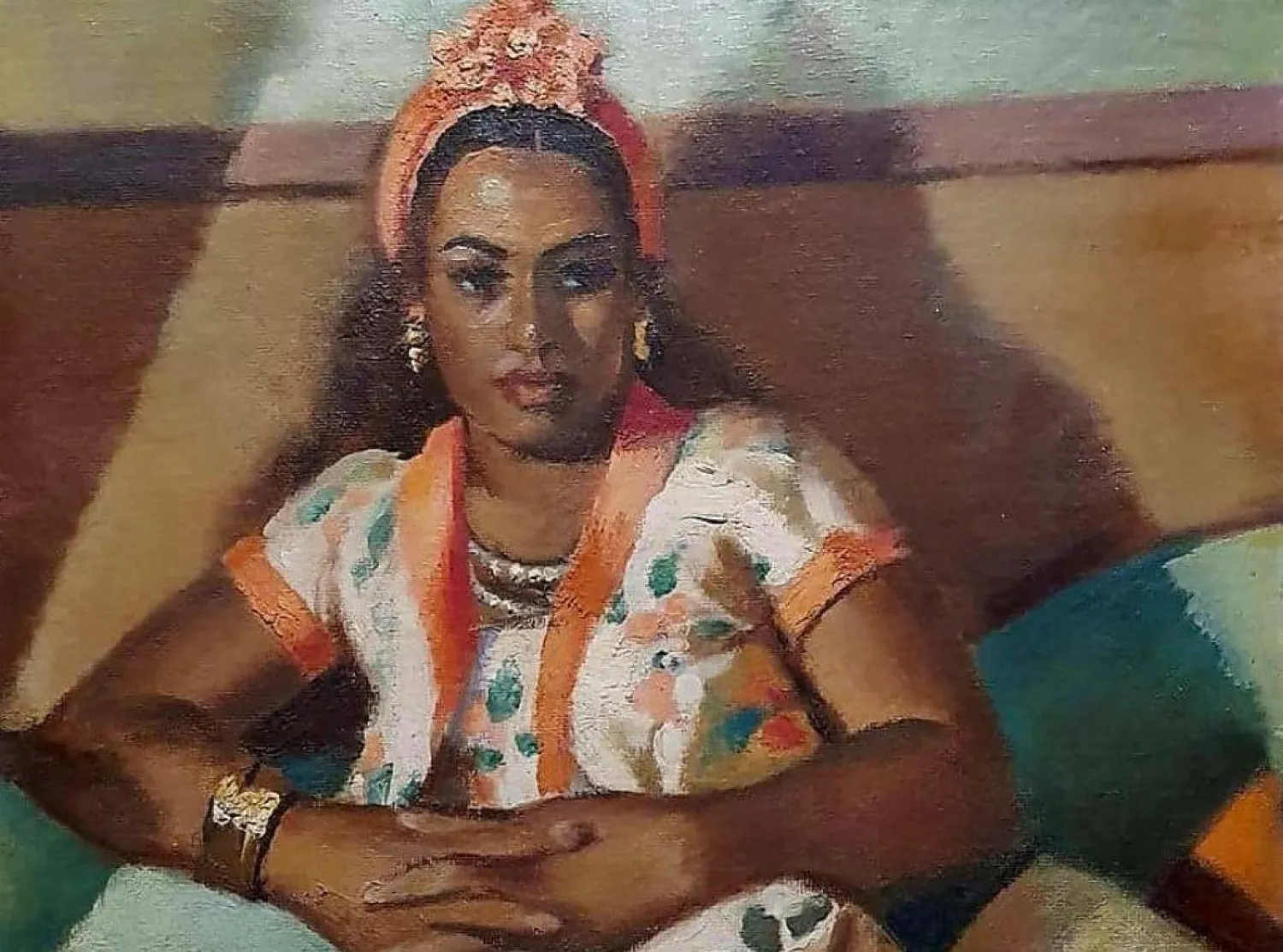
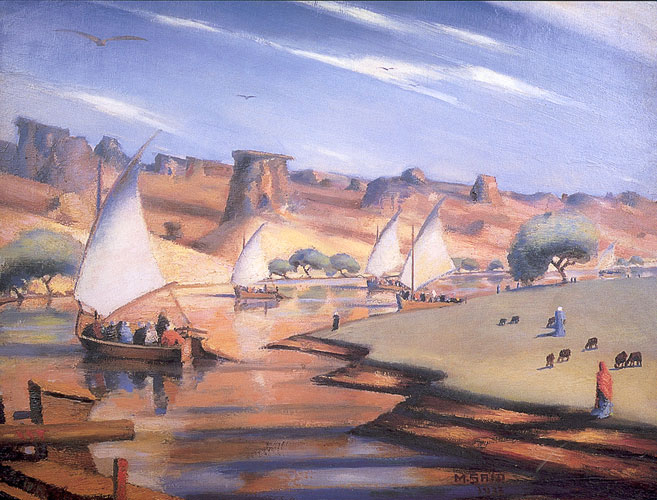
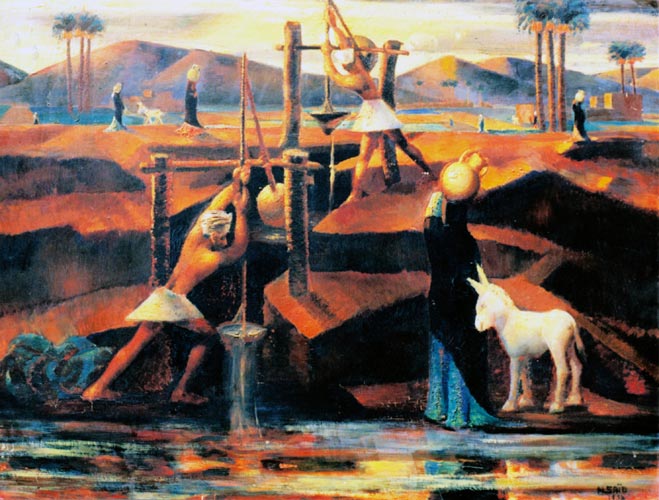
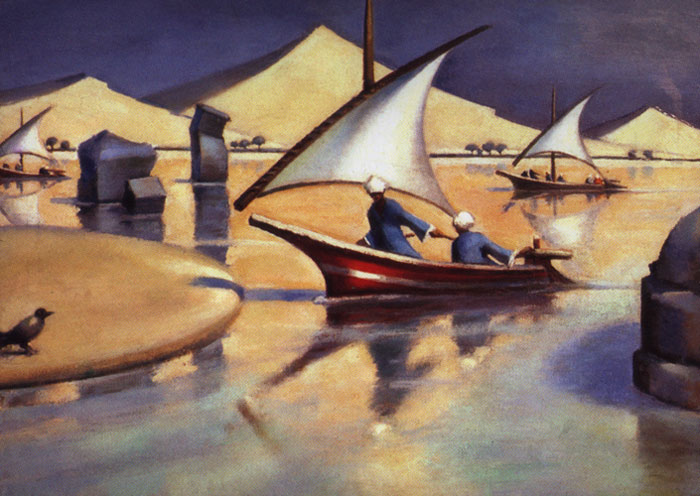
His chromatic universe was characterized by a rare cross-cultural resonance. His wanderings and creative inquiries expanded beyond the borders of Egypt to the landscapes of Lebanon and Greece, yet the “sea” remained a permanent, pulsating anchor throughout his oeuvre. Central to his composition was the Egyptian woman—whether rendered as the sensuous maidens of Alexandria’s Bahari district, the stoic rural peasant, or the refined aristocrat—serving as the ultimate vessel for localized warmth and the quintessential Egyptian spirit.
![]()
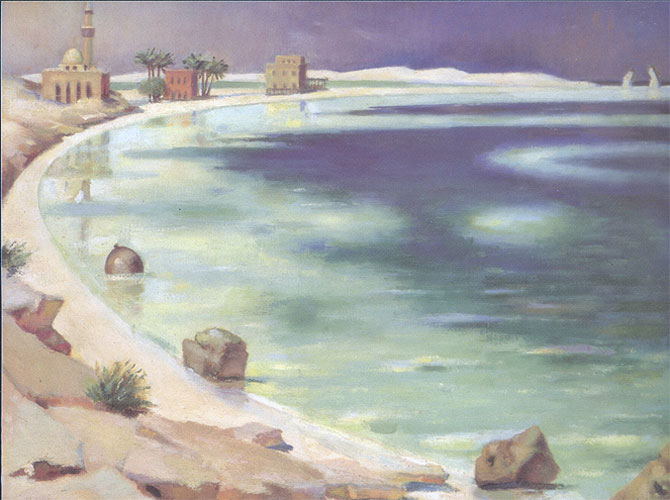
A curated selection of Mahmoud Saïd’s landscape and maritime studies. This presentation highlights his radiant chromatic palette and intense manipulation of Mediterranean light across Alexandria, Marsa Matrouh, and Lebanon, framing the aquatic horizon as a permanent metaphysical landscape throughout his oeuvre.
IV. Canonical Masterpieces in Global Collections
Saïd produced an elite body of work that serves as the bedrock of modern Arab art. Among his most celebrated masterpieces are:
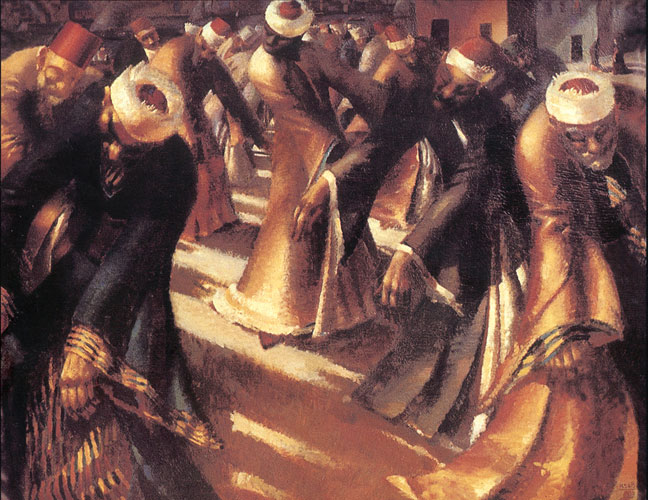
- The Whirling Dervishes (Les Derviches Tourneurs, 1935): A sublime manifestation of visual mysticism and sacred geometry. The painting etched its place in global art market history in April 2010 when it fetched over $2.43 million at Christie’s International in Dubai, establishing a historic benchmark as the most valued work by a Middle Eastern modern master at auction.
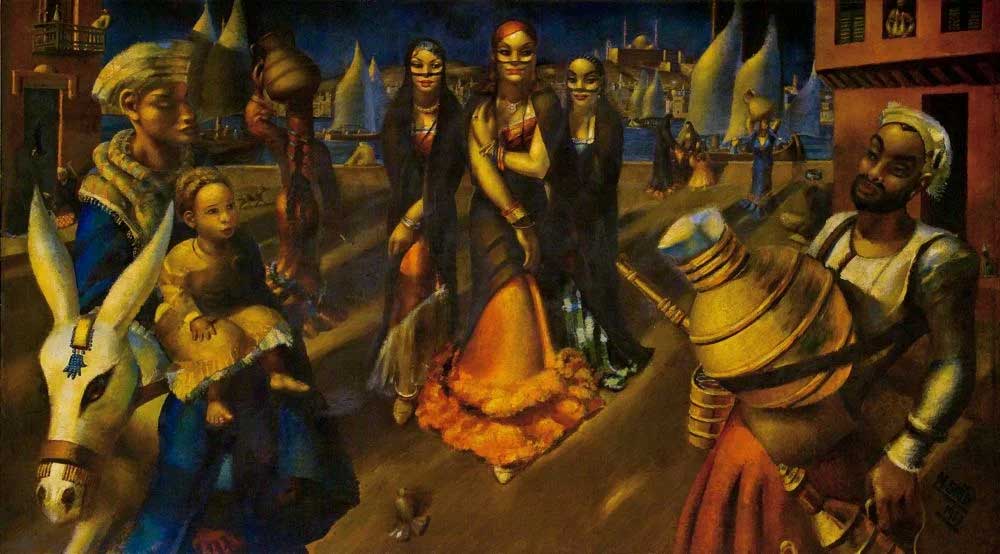
- The Maidens of Alexandria (Banat Bahari): A magnificent aesthetic celebration of the physiognomy and voluptuous posture of Alexandria’s working-class women, wherein localized folklore seamlessly coalesces with rigorous European academic structure.
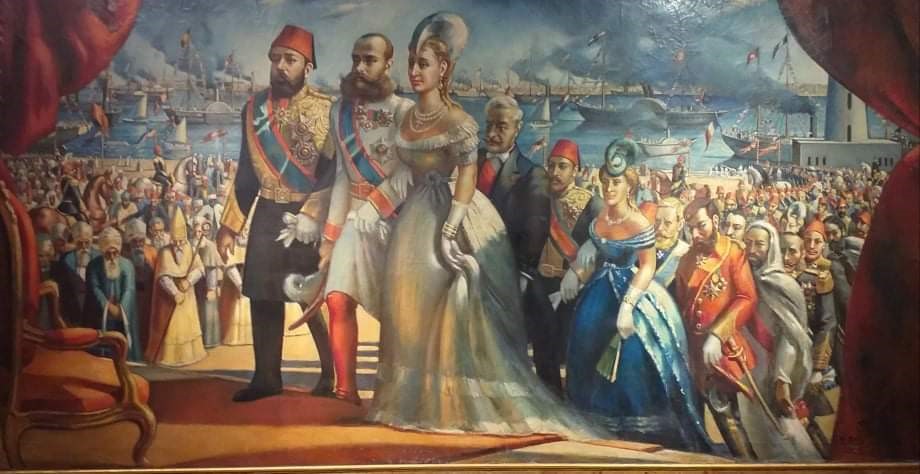
- The Inauguration of the Suez Canal: A monumental, panoramic historical epic documenting the historic event under the reign of Khedive Ismail.
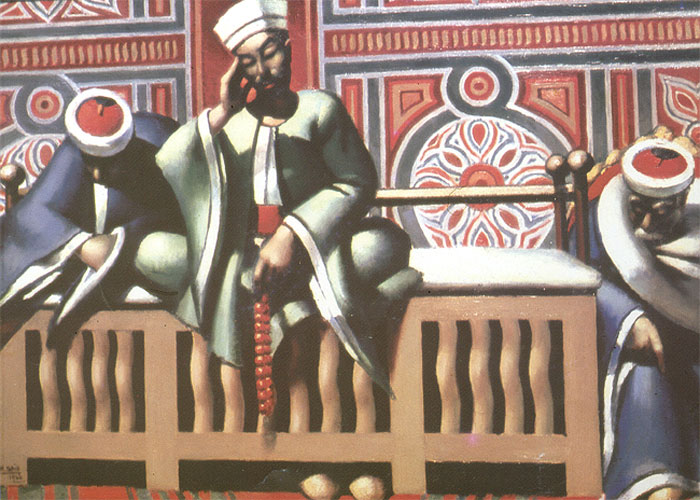
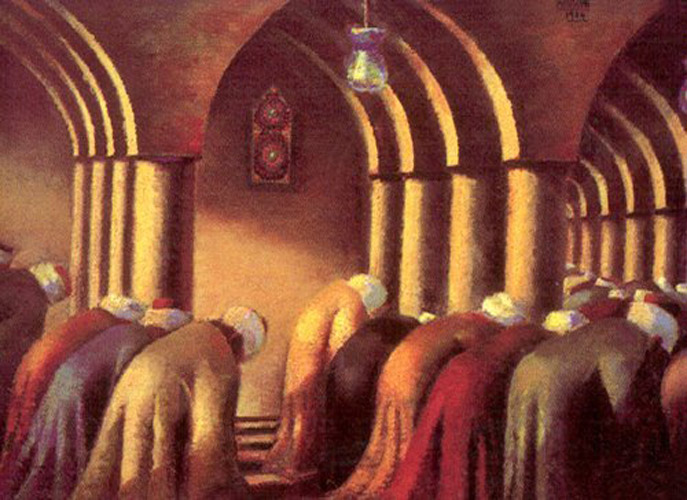
- The Spiritual and Topographical Series: Masterpieces such as The Tombs of Bacos, The Prayer, Dhikr, The Sheikh in the Pavilion, and his tranquil still-lifes, all of which emanate an inner, metaphysical illumination.
![]()
Monumental historical and spiritual epics defining modern Arab art, encompassing the academic pageantry of The Inauguration of the Suez Canal, the rhythmic geometry of Dhikr, the majestic complexity of The City, and the absolute, transcendent silence woven into The Prayer.
V. Institutional Laurels and Institutional Immortality
Throughout his career and posthumously, Saïd received the highest echelons of national and international accolades. He was awarded the Gold Medal of Honor at the Paris International Exhibition in 1937 for his contribution to the Egyptian Pavilion, and France bestowed upon him the prestigious Légion d’honneur. The apex of his institutional validation occurred in 1960, when he became the inaugural visual artist to receive the State Merit Prize for the Arts in Egypt, presented personally by President Gamal Abdel Nasser.
On April 8, 1964, Mahmoud Saïd passed away, leaving behind a monumental material culture. In recognition of his enduring legacy, the Egyptian state converted his historic Alexandrian residence into a world-class institutional repository (The Mahmoud Saïd Museum Center), preserving his oeuvre as a permanent pilgrimage site for international connoisseurs.
![]()
The Permanence of the Visual Gaze
To trace the trajectory of Mahmoud Saïd within the realm of elite fine arts is to immerse oneself in the core architecture of modern Arab identity. This patrician intellectual successfully dissolved his aristocratic distance into the rich tapestry of his people, endowing the Arab canvas with a global authority capable of commanding the walls of the world’s most rigorous institutions. His works endure, speaking across generations of a man who firmly believed that art is the eternal aperture through which the human soul beholds light, freedom, and beauty.
![]()